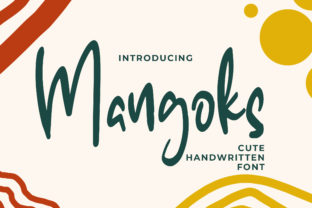
Mangoks: A Stunning Script Font for Personalized Branding
I remember staring at a blank Figma file late on a Tuesday night, trying to breathe life into a identity for a small-batch skincare brand. The client wanted something that felt organic, intimate, and undeniably human, but every standard serif or geometric sans-serif felt too cold, too corporate. That was the moment I pulled up Mangoks. It wasn’t just another script in my library; it was the missing piece of the puzzle. As a designer who spends hours tweaking kerning pairs and balancing visual weight, I don’t often get excited by new typefaces, but this one caught me off guard. It’s not just decorative; it has a pulse. In this review, I’m breaking down how this Script Handwritten style performed when I dragged it from a download folder into real-world Fonts applications like logo drafts, packaging mockups, and digital headers.
Mangoks as a Logo Design Accent for Boutique Brands
When you first open the font files for Mangoks, you’re greeted by a personality that feels both effortless and meticulously crafted. It’s a Script Handwritten typeface that avoids the overly calligraphic stiffness of traditional scripts, opting instead for a loose, flowing energy that reads as authentic rather than artificial. I tested this immediately on a logo concept for a local artisan bakery. The challenge with any script in logo design is legibility versus aesthetic charm. If it’s too messy, customers can’t read the name; if it’s too rigid, it loses its "handmade" appeal. Mangoks struck a rare balance. When paired with a clean, minimal sans-serif for the subtext, the script provided that crucial "personal touch" without overwhelming the hierarchy. It works best as an accent font here—perhaps for the business name itself—allowing the supporting typography to handle the functional details. This combination creates a modern typography system that feels established yet approachable, perfect for creative studios or handmade sellers looking to elevate their visual identity.
Mangoks for Packaging Design and Product Labels
One of the most demanding tests for any display font is seeing how it holds up on physical surfaces. I took Mangoks into a mockup phase for a line of natural soaps, placing it on curved labels and flat cardboard boxes. The unique charm of this font lies in its variable stroke width and natural ink-feel variations, which translate beautifully to print. On a product label, it doesn’t look like a digital imposition; it looks like it was written with a brush. This is critical for packaging design because it signals quality and care to the consumer before they even touch the product. Unlike generic decorative fonts that can look pixelated or disjointed at smaller sizes, Mangoks maintains its integrity. However, I found that it performs best when used for short phrases—like the brand name or a key tagline such as "Handcrafted" or "Organic." Trying to force long sentences onto a soap box would compromise readability. For these specific use cases, it acts as a powerful visual hook, drawing the eye and encouraging engagement with the shelf presence of the item.
Mangoks in Social Media Graphics and Digital Headers
Digital spaces move fast, and attention spans are short. I integrated Mangoks into a series of Instagram posts and a website hero section for a freelance photographer’s portfolio. In the realm of social media graphics, a script needs to pop without requiring the user to squint. Because Mangoks has a distinct character set, including lovely alternates and swashes, it adds immediate visual interest to static images. I used it for quote cards and announcement banners, where its relaxed vibe softened the overall composition. On the web, specifically in a web design header, it served as an excellent headline font. It conveys creativity and individuality instantly. When paired with a neutral background, the dark, rich strokes of the letters stand out sharply. It’s worth noting that while it’s stunning for headlines, it should never be used for body text or navigation menus. Its strength is in being a statement piece—a way to say, "This brand has a story," right from the first glance. For content creators and bloggers, using Mangoks in featured images or banner ads can significantly boost click-through rates by adding a layer of professionalism and artistic flair that stock templates lack.
Mangoks for Wedding Invitations and Editorial Design
The emotional resonance of a typeface is perhaps its most underrated feature, and Mangoks excels here. I experimented with it for a wedding invitation suite, pairing it with delicate florals and ample white space. The Script Handwritten nature of the font mimics the elegance of hand-lettered stationery without the cost and time of actual calligraphy. It brings a romantic, timeless quality to editorial design projects. Whether it’s a boutique identity project for a florist or a high-end restaurant menu, Mangoks adds a layer of sophistication. It feels personal because it feels imperfect in the right ways—the slight irregularities make it feel human. In these contexts, the font isn't just conveying information; it’s setting a mood. It tells the reader that attention to detail matters. For entrepreneurs and small business owners in the lifestyle sector, this font can bridge the gap between professional polish and warm hospitality, making your brand feel accessible yet premium.
Practical Tips for Testing and Licensing Mangoks
Before committing to Mangoks for a final client deliverable, there are practical steps every designer should take. First, test the font across different mediums. What looks crisp on a 4K monitor might render differently on a thermal printer or a heat press for merchandise. Check the ligatures and alternate characters included in the package; sometimes, swapping a standard 'a' or 'e' for its cursive counterpart can dramatically improve the flow of a wordmark. Also, consider font pairing carefully. Since Mangoks is a dominant display font, it needs a quiet partner. A simple geometric sans-serif or a classic serif font will ground it, preventing the design from feeling chaotic. Finally, always review the commercial license. While Mangoks is a stunning tool for adding a personal touch, understanding whether you can use it in unlimited end-products, digital templates, or print-on-demand items is crucial for protecting your business. It’s an investment in your brand’s voice, so ensure you have the rights to scale it as your business grows.